Author: [AUTHOR] Published on 12/1/2025 12:00:00 AM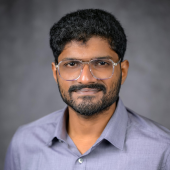
Aman Suresh Tharayil, PharmD, PhD Student, Saveetha Institute of Medical and Technical Sciences, Chennai, Rammanatukara, India
What does being part of the Low-to-Middle Income Country (LMIC) Accelerator Program mean to you?
Being part of the LMIC Accelerator has truly been one of the most transformative experiences of my professional journey. It came at a pivotal time, just after I cleared my PhD entrance, and it connected me with a supportive global community. The opportunity to be mentored by Dr Sabrina Paglialunga has been particularly meaningful. Her guidance and encouragement have had a significant impact on my professional development. What stands out most is the spirit of collaboration among the selected participants; many of us remain in contact and are already exploring further research partnerships. Through this program and the ASCPT Annual Meeting, I have also had the chance to connect with like-minded professionals from across the globe. The ASCPT’s learning platform, especially the educational courses, initially drew my attention and steadily helped me build both confidence and competence in clinical pharmacology. This initiative has not only broadened my research perspective but has also motivated me to contribute more meaningfully to healthcare advancement.
What professional accomplishment are you most proud of?
Among many rewarding milestones, I take great pride in being a participant in the ASCPT LMIC Accelerator Program and being selected as a finalist in the Research Pitch competition. These recognitions reinforced the global relevance of my work. I have published over 20 articles in reputed journals, including Web of Science and Scopus-indexed platforms, and served as a reviewer for more than 150 manuscripts. My recent publications include studies on the quality of life with type 2 diabetes with comorbidities, hemodialysis complications, and case reports, all of which contribute to evidence-based practice. Being an editorial board member and reviewer for international journals, such as PLOS ONE, Cureus, and IGI Global, has also strengthened my academic standing and peer credibility.
Do you have a favorite tip or trick for clinical practice or research that you want to share with fellow members?
My most valuable tip is “Never miss an opportunity to read or explore something you are unsure of.” Much of my advancement in clinical practice and research came through actively engaging in peer reviewing. After publishing a few articles, I began reviewing manuscripts for various journals. This practice pushed me to evaluate research critically and from multiple perspectives. Initially, it was challenging to grasp complex methodologies and data presentations, but over time, this process sharpened my understanding and sparked innovative ideas. Today, I encourage young researchers to take on reviewing as a learning tool; it is a powerful way to refine one’s thinking and broaden analytical skill.
How do you keep focused and motivated?
I have learned to work productively under moderate pressure, a skill that has evolved through my teaching responsibilities, student mentorship, and meeting academic deadlines. As an assistant professor, guiding students in research continually pushes me to think innovatively and critically evaluate emerging ideas. Whether preparing a manuscript or assessing a student’s project, I focus on identifying underexplored areas and offering thoughtful insights.
Working in an academic setting in India also presents unique challenges, particularly resource limitations. To stay on track, I rely on organization, resourcefulness, and a clear understanding of feasibility. Throughout this journey, I have been fortunate to receive support from individuals who positively influenced my direction. Ramesh Sir, a postdoctoral fellow and colleague, was a constant source of encouragement in my early academic phase. My PhD guide, Dr Nithya Varadarajan, has been instrumental in motivating me to push boundaries and strive for excellence. Additionally, Dr Aiswarya Nair, a close friend and PG resident in Microbiology, played a meaningful role in encouraging my interest in research during its formative stages.
What is the most important leadership lesson you have learned the hard way?
The most critical leadership lesson I have learned is that effective leadership requires patience and empathy, not just technical expertise. Interestingly, this was not a lesson I learned the “hard way,” but rather through a moment of clarity during a meaningful experience. It occurred during our first mentorship session with Dr Sabina Paglialunga, who was assigned as my mentor through ASCPT. Due to internet issues on my end, I kept disconnecting and was unable to communicate properly on Zoom. If the roles had been reversed, I might have lost patience, but she remained calm, waited for me to reconnect, and ensured that we could still have a meaningful discussion. Her approach deeply impressed me. It reminded me that true leadership is not about control of perfection; it is about creating a supportive environment, even in imperfect circumstances. That encounter made me realize how powerful empathy and composure can be, and now it shapes how I try to mentor others with understanding and the willingness to meet people where they are.
Dr Suresh Tharayil has been a member of ASCPT since 2024.
