Author: [AUTHOR] Published on 2/1/2026 12:00:00 AM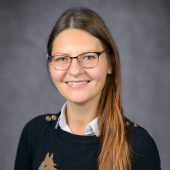
Tatiana Iakovleva, PharmD, Research Assistant Professor, University of Florida, Orlando, Florida
What does being the Systems Pharmacology (SP) Community Vice Chair mean to you?
Serving as Vice Chair of the Systems Pharmacology (SP) Community is one of the most meaningful opportunities of my professional life. I first joined as a student liaison, and from the very beginning, I felt welcomed—the energy in the group was collaborative, productive, and full of humor. It felt surreal to work side by side with people I had long admired through their papers and talks.
Being elected as the Vice Chair felt like a golden ticket to help shape the future of SP alongside diverse leaders from academia, industry, and regulatory agencies. I learn something new every day and feel grateful that I am not just observing the field’s future unfold but actively contributing to it.
What professional accomplishment are you most proud of?
One accomplishment I am especially proud of is contributing to the QSP Educational Webinar Series developed by our SP Community last year. This four-part series aimed to introduce QSP to a broader audience, and I had the honor of being one of the speakers.
It combined my two passions: QSP and education. In the same spirit, I am currently developing a graduate-level QSP course in my role as Research Assistant Professor at the University of Florida, set to launch this fall. While still in progress, it is shaping up to be one of my most meaningful contributions: sharing QSPE knowledge with students.
What is the most important leadership lesson you have learned the hard way?
I am still learning this lesson every day: focus is everything. It is tempting to say “yes” to every exciting idea or request for help. But effective leadership requires clarity—prioritizing what you are most passionate about, what is most impactful, and where your skills can make the biggest difference. It is not easy to say no, especially when you want to support others, but learning to do so thoughtfully (and without guilt!) has been key to growing as a leader—and a human being.
What has been the greatest challenge in your career?
One of the biggest challenges I have faced is working in a language that is not my native one. I never studied English in school—it was German—so I had to learn it from scratch when I began my scientific journey. In the early days, every presentation slide came with a written script and pronunciation check. I had to translate almost every word in an article just to decide whether it was relevant to my research.
It was slow and sometimes discouraging but ultimately empowering. I still have an accent (and probably always will!), but I have found my voice and confidence. In a field as international as ours, I see this as part of the journey, not a barrier, but a step in learning to communicate science across cultures.
When you are not working, how do you spend your free time?
To recharge from work, I rely on two strategies. For everyday stress relief, I love to crochet. It might sound simple, but working on a detailed pattern requires constant focus and counting, which gives my mind a break from the constant stream of scientific thinking. It is incredibly grounding.
For vacations, I take the opposite approach: full activity mode! I love active travel, packed with new experiences and emotions. It is the only way I can truly reset. I know it has been a good trip when I come back completely refreshed… and cannot remember my laptop password.
What was your childhood dream job?
As a child, I had a book about medicinal plants, and every summer I would take it with me to hunt for real-life versions of the herbs in its pages. I would identify them, collect and dry them, and build my own herbarium. I was fascinated by their healing properties—I think I was part aspiring phytopharmacist, part little forest witch, dreaming of magical elixirs that could cure everything!
That early curiosity definitely nudged me toward pharmacy and eventually, into model-informed drug development. So even if I am not brewing potions in the woods anymore, I like to think I am still chasing the same idea—creating something that can help people heal.
Dr Iakovleva has been a member of ASCPT since 2023.
