Author: Mark Dresser, PhD on November 16, 2018 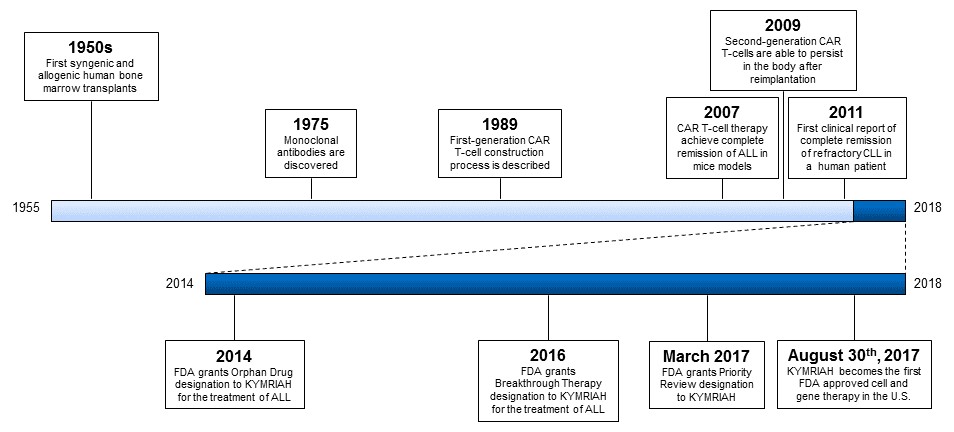
In a recent Commentary published in Clinical and Translational Science, Rodriguez-Cartagena and co-authors provide an excellent introductory overview of the emerging field of Chimeric Antigen Receptor (CAR) T-Cell therapeutics. The Commentary provides a comprehensive summary of the scientific advancements and regulatory pathways that led to the approval of the first CAR T-cell therapies in 2017: tisagen-lecleucel and axicabtagene-ciloleucel. In addition, the authors summarize key historical and clinical background as well as the technical challenges encountered in the development of this new class of cancer treatments, providing the reader with both the broader context of CAR T-cell therapies within the scope of immunotherapy as well as shedding light on points to consider for future cell and gene therapies. The development and clinical application of tisagen-lecleucel and axicabtagene-ciloleucel represent major breakthroughs in the way B-cell lymphoma and leukemia are treated. In essence, this novel therapeutic approach utilizes specially altered T-cells to fight cancer. While the two CAR T-cell therapies are approved to treat blood-based cancers, there are now numerous ongoing preclinical and clinical investigations underway to assess this therapeutic strategy to treat a broad range of blood cancers as well as solid tumors. While 2017 may be viewed as a watershed period for adoptive cell transfer therapeutics, there is much exciting work ahead in this field. The CTS editorial team encourages the submission of manuscripts focused on the translational science and medicine aspects of CAR T therapies.
Image by Rodriguez‐Cartagena et al. Clin. Trans. Sci., doi.org/10.1111/cts.12586, is licensed under CC BY-NC-ND 4.0. ©2018 The authors.

The comment feature is locked by administrator.