Author: Hannah Adams, BS on June 11, 2026 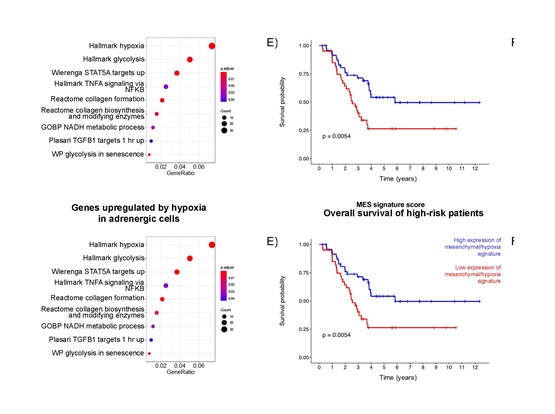
Neuroblastoma, the deadliest solid childhood cancer outside the brain, is thought to contain two cell states: aggressive, stem-like mesenchymal cells and committed, neuron-like adrenergic cells. Adrenergic cells comprise the bulk of tumors and are generally more sensitive to traditional therapy, while mesenchymal cells are more resistant and may seed metastases and recurrence. Better understanding the regulatory networks governing these lineages – especially under the hypoxic conditions often found in the tumor microenvironment – can help lead to better treatments for this disease.
We studied the genetic hallmarks distinct to each cell state in normoxic and hypoxic conditions, finding that hypoxia drives adrenergic cells to a more mesenchymal phenotype. This shift led to decreased mitochondrial function and increased expression of the TNF-α pathway, which can have both pro- and anti-inflammatory effects. When this hypoxia-induced shift was coupled with increased signatures of T cell infiltration in high-risk tumors, children had improved overall survival.
Our data suggest hypoxia induces phenotypic plasticity that may, in part, be pro-inflammatory. While further confirmatory work is necessary, genetic signatures of the hypoxia-induced phenotypic shift combined with increased T cell infiltration could be a possible biomarker indicative of improved response to immunotherapy for patients with high-risk neuroblastoma.

The comment feature is locked by administrator.