Author: Martin Coenen, MD on July 09, 2026 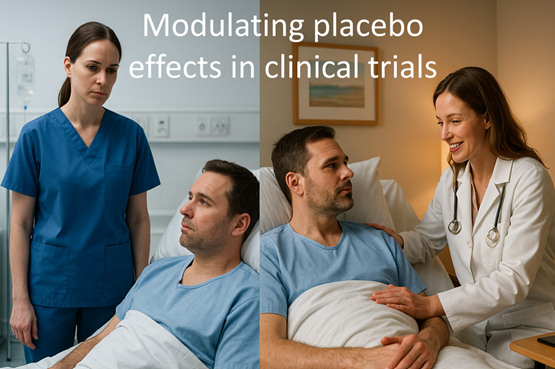
The placebo effect is one of clinical pharmacology's most persistent headaches. When patients improve simply because they expect to — regardless of what they're actually taking — it can mask a drug's true efficacy, erode assay sensitivity, and in the worst cases, derail the approval of a genuinely effective treatment. For decades, researchers have sought ways to control this phenomenon, mostly by educating patients about placebo mechanisms. But what about the study team itself? After all, in early-phase inpatient trials, clinicians, nurses, and coordinators spend days in close, repeated contact with participants — building rapport, answering questions, shaping the entire therapeutic atmosphere. Could a targeted briefing of that team — teaching them to either amplify or suppress placebo-generating cues — move the needle on trial outcomes? That is precisely the question the PINgPOng investigators set out to answer, and the results are more nuanced, and arguably more important, than a simple yes or no.
The study enrolled three consecutive cohorts of 32 healthy volunteers each, all assessed using the cold pressor test — an established model for opioid analgesia in which participants immerse a hand in 6°C water while rating pain continuously. Every participant received both oxycodone (15 mg) and placebo in a crossover fashion. The key manipulation was at the level of the study team: one cohort was treated by an entirely naïve, unbriefed team; a second by a team trained to actively maximize placebo effects through empathic communication and positive drug framing; and a third by a team briefed to minimize those effects through deliberate emotional neutrality. What we found: The short answer is that the briefing had some, but not enough, influence on the placebo effect as intended. Neither pain reduction nor treatment expectations differed significantly across the three study arms. But what did emerge was arguably more instructive for the field. Oxycodone's side effects — nausea, dizziness, fatigue — effectively unblinded participants (92% correctly guessed their treatment), and those who suspected they had received the active drug reported markedly higher treatment expectations. Critically, a positive correlation between higher expectations and greater analgesic effect was found only in the oxycodone group, not the placebo group. This indicates interactions between treatment expectation, pharmacological effects and pain perception. Separately, salivary alpha-amylase — a marker of sympathetic nervous system activation — was paradoxically elevated in the "maximize" arm, suggesting that the team's intensified attentiveness created physiological stress rather than comfort in participants.
For clinicians and trialists, these findings carry concrete implications. First, they reinforce just how formidable a confounder unblinding-by-adverse-effects can be: when a drug announces itself through its side effect profile, it inflates both treatment expectations and, through those expectations, the perceived treatment effect — a compounding bias that will systematically overestimate drug-placebo differences if not accounted for in the analysis. Second, the failure of a brief team-level behavioral intervention in this highly controlled phase I setting sets a useful benchmark: if a standardized, protocol-driven, multi-visit inpatient unit is not sufficient for even a targeted team training to measurably shift placebo responses in healthy volunteers, then such approaches will require substantially greater intensity, duration, and refinement before they can be exported to patient populations in phase II or III trials — where placebo effects are typically far larger and the stakes higher. The PINgPOng study doesn't close the door on team-level interventions; it clarifies precisely how high that door is set. The findings underline how difficult it is to modulate placebo effects in a real-world clinical trial setting. Future research should test more intensive, sustained approaches to optimize expectation management—both to improve trial assay sensitivity and to translate placebo research into better clinical care.

The comment feature is locked by administrator.