Author: [AUTHOR] Published on 10/1/2026 12:00:00 AM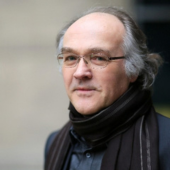
Sander Vinks, PharmD, PhD, Emeritus Professor, NDA Partners, Missoula, Montana, USA
What does being the 2026 Rawls-Palmer Progress in Medicine Award Recipient mean to you?
Being the 2026 Rawls-Palmer Progress in Medicine Award Recipient is a great honor and a wonderful recognition by my peers. I feel very fortunate to have been recognized in this very special way. I was so impressed and humbled by the nomination letter Carl Peck, MD, had written and which was supported and co-signed by so many of my colleagues. I truly enjoyed the opportunity to highlight my career successes and achievements during the Annual Meeting again after a heartwarming introduction by Carl!
What is your favorite part of being a 2026 Rawls-Palmer Progress in Medicine Award Recipient?
The wonderful recognition and to now be part of this illustrious group of Rawls-Palmer Progress in Medicine Award recipients, all clinical pharmacology giants in their own right.
What was the best thing about attending the ASCPT 2026 Annual Meeting?
Experiencing the camaraderie and meeting up with so many colleagues with whom I have collaborated and exchanged ideas over the years. It was wonderful to see so many old friends and cherish good old memories and the exciting times for clinical pharmacology, quantitative science, and AI.
What professional accomplishment are you most proud of?
The professional accomplishment I am most proud of is the fact that our multidisciplinary teams have been able to develop and implement PK/PD model-informed precision dosing into the workflows of many clinical specialties. Several clinician scientists were initially skeptical in terms of “Is this ready for prime time”? But now have run with our ideas and have become champions advocating for MIPD and the clinical decision support tools we collaboratively built, proclaiming they are transformational for their discipline and patients.
What is the most important leadership lesson you have learned the hard way?
The importance of respect, relationship building, understanding where the other person is coming from, and establishing good lines of communication.
Who has inspired you in your career?
Many people have inspired me throughout my career, but I would like to specifically mention a few of my heroes here. Early on as a student at Leiden University in the Netherlands, my professors and later thesis mentors Professors Douwe Breimer (who later served as President of the University) and Dr. Meindert Danhof. They introduced me to the principles of PK/PD. Supported by a Rotary International Foundation scholarship, Douwe Breimer was instrumental in helping me get accepted at the University of Toronto, Canada, in the pharmacology program of Professors Werner Kalow and Ted Inaba. This life-changing year in Toronto provided an early introduction to pharmacogenetics, which later at Cincinnati Children's formed the basis for a license and the successful formation of a startup company, AssureX and its GeneSight TM test (later acquired by Myriad Genetics). Another inspirational event occurred in 1993 when attending a workshop by Roger Jelliffe, MD, on Bayesian Adaptive Control and Precision Dosing Software; I later was able to spend a mini-sabbatical with Roger and his team of rocket scientists from the Jet Propulsion Center in Pasadena, CA. This has inspired me to this day and formed the basis of my model-informed precision dosing research and implementation projects.
What has been the greatest challenge in your career?
Sustaining financial stability of my Division of Clinical Pharmacology (faculty and staff) and its research programs. At Cincinnati Children's, every Division is set up as its own business unit with a business director and staff. I have been fortunate that we have been able to develop a diversified portfolio of revenue streams of National Institutes of Health and foundation grants to support our research program, further supported by a clinical PK and pharmacogenetics consultation service, M&S and service contract work for modeling and simulation, and pharmacometrics projects.
Do you have a favorite trip or trick for clinical practice or research that you want to share with fellow members?
A great principle that has worked well for developing my multidisciplinary translational and clinical research program was to find clinical champions.
What is your favorite Society memory?
My best memories are from my time as an associate editor for our journal Clinical Pharmacology & Therapeutics. Our monthly meetings with the editorial team and many other interactions with our editors Scott Waldman, MD, PhD, and later Piet van der Graaf, PhD, PharmD, and Kathy Giacomini, PhD, have been so enriching and inspiring: priceless!
When you are not working, how do you spend your free time?
Since moving to Montana after retiring from my active role at Cincinnati Children's, my days are spent with a lot of outdoor activities, including hiking and riding my gravel bike on the many trails along the Clark Fork, as well as fly-fishing on the Black Foot and Bitterroot rivers while being taught by my son, who is a real trout whisperer. This is “A River Runs Through It” country!
In addition, I have always been very interested in music and art (my partner of 50+ years is an artist/painter and curator). One of the quotes inside the cover of my PhD thesis states: “The mysterious is the most beautiful we can experience; it is the true source of all arts and science” (Albert Einstein). And therefore, with much pleasure now, I have more time for music, my daily playing of the bassoon, to catch up with the practicing I took for granted when I started as a kid. I started playing (and singing) in a group called The Syndicate in the Netherlands. Our group dates back to the early nineties at one of the hospitals in The Hague, when two bassoon players got together with a guitar and a guitar/banjo player, to be accompanied by an electric violin, and a bass player.*.
How do you keep focused and motivated?
I have a nice fluke story. At the farewell symposium honoring Dr. Meindert Danhof at Leiden in 2017, Douwe Breimer arranged for us to stay at this small boutique hotel at one of Leiden's old canals (“gracht”). We were there with my heroes, Drs. Malcolm Rowland, Don Stansky, and Carl Peck, and their partners, and had a wonderful time. It was there that Carl invited me to join NDA Partners. Since then, I have had much fun building a pediatric model-informed drug development (MIDD) consulting practice that keeps me involved in many inspiring new projects with sponsors while continuing to work with my former pharmacometrics team and Cincinnati Children's Hospital Medical Center.
What was your childhood dream job?
My childhood dream job was to become an architect designing contemporary houses. I was impressed and inspired by a local architect who designed several cool modern houses in the neighborhood where I grew up. I was very interested by the works of the Bauhaus movement, Le Corbusier, and of course, Frank Lloyd Wright. Still following architectural developments via my favorite magazine Dwell!
Sander has been a member of ASCPT since 2001.
*In 2020, I played my bassoon with Greg Kearns playing his trumpet for the ASCPT Podcast. Check it out here: https://soundcloud.com/user-935880369/ascpt-musician-series-gregory-kearns-and-alexander-vinks/s-xjLI8czKKr7.
