Author: Dorys Lopez Ramos, PhD, and Robert Tell, PhD on August 11, 2026 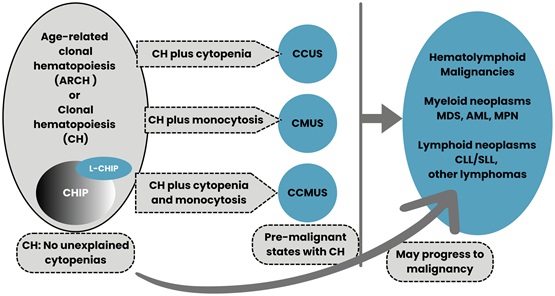
Circulating cell-free DNA (cfDNA) has become a foundational tool in liquid biopsy, enabling minimally invasive detection and monitoring of cancer. These short DNA fragments are released into the bloodstream during normal cell turnover and originate largely from hematopoietic cells such as white blood cells and their progenitors. A smaller but clinically critical fraction of cfDNA comes from tumors and is referred to as circulating tumor DNA (ctDNA).
Because cfDNA is primarily derived from white blood cells, variants arising from clonal hematopoiesis (CH) frequently appear in cfDNA sequencing data. CH occurs when somatic variants arise in hematopoietic stem or progenitor cells, allowing those clones to expand over time. While CH is a normal age-associated biological process, its presence in cfDNA analyses poses a major challenge: CH-associated variants can be mistaken for tumor-derived mutations.
This misclassification can have significant consequences, including inaccurate assessments of tumor burden, misleading results in ctDNA monitoring studies, inappropriate therapeutic decisions, and false-positive findings in cancer screening. Therefore, accurately distinguishing CH from tumor-derived variants is essential.
Despite growing recognition of CH as a confounder in liquid biopsy, the terminology used to describe its biology and clinical implications remains inconsistent. Closely related terms, such as CH, clonal hematopoiesis of indeterminate potential (CHIP), and age-related clonal hematopoiesis (ARCH), are often used interchangeably, even though they describe distinct biological and clinical contexts. For example, all CHIP is CH, but not all CH is CHIP, as CHIP requires additional criteria such as specific driver genes, variant allele frequency thresholds, and the absence of cytopenias, dysplasia, or overt malignancy. ARCH reflects the age-associated nature of CH and is not interchangeable with either CH or CHIP.
To address this confusion, the paper introduces a standardized lexicon of 23 key terms related to clonal hematopoiesis. The goal is to provide a common language that improves clarity and consistency across research, clinical practice, and the development of diagnostics and therapeutics. By defining these terms in a uniform way, the lexicon aims to reduce misinterpretation of cfDNA findings and support more accurate study design, data analysis, and clinical decision-making.
While this publication establishes a foundational set of terms, it also recognizes that the field continues to evolve. As new biological insights and clinical applications emerge, the lexicon is intended to serve as a living framework, supporting ongoing refinement, collaboration, and progress in clonal hematopoiesis and liquid biopsy research.

The comment feature is locked by administrator.