Author: Michelle Liu, PharmD; Megan M. Shuey, MS, PhD; Darlene F. Fountain, RN, MSN; James Jaworski, MPh; Sudeep D. Sunthankar, MD, MSCI; Digna R. Velez Edwards, MS, PhD on August 27, 2026 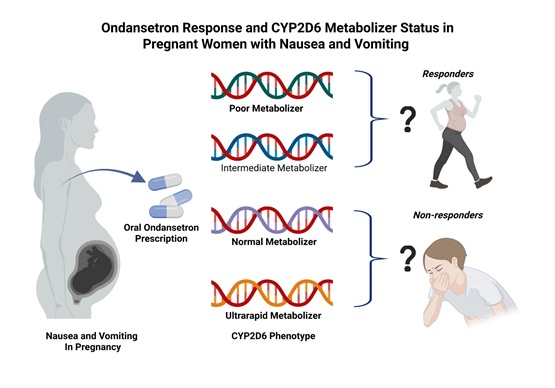
Image generated in BioRender.com
Nausea and vomiting in pregnancy (NVP), colloquially known as morning sickness, impacts 8 in 10 pregnancies. When symptoms are severe, patients are often prescribed ondansetron, an anti-nausea medication. Previous studies, in non-pregnant persons, suggest variable response to ondansetron based on the CYP2D6 genotype. These findings prompted the Clinical Pharmacogenomics Implementation Consortium to approve a guideline suggesting that individuals with a CYP2D6 ultrarapid metabolizer genotype receive alternative treatments. Our study sought to determine the impact of CYP2D6 genotype on NVP symptom relief given guideline recommendations and increased activity of the CYP2D6 enzyme during pregnancy.
We conducted a retrospective case–control study of 264 pregnant persons on oral ondansetron for NVP within 20 weeks of conception. We performed CYP2D6 genotyping (including three copy number variants) and determined both CYP2D6 activity score and phenotype, e.g., ultra, normal, intermediate, or poor metabolizers (UM,NM,IM,PM, respectively). An individual was determined to be nonresponsive to treatment if they received escalation of care, such as hospitalization, use of intravenous ondansetron, or addition of alternative antiemetics. Outcomes were adjudicated from medical records and reviewed independently by two reviewers.
We found CYP2D6 metabolizer status (UM/NM vs. PM/IM OR 1.53 (0.88–2.66), p = 0.14) and activity score (OR 1.22, 0.81–1.85, p = 0.35) were not significantly associated with clinical nonresponse in early pregnancy, despite a trend toward higher nonresponse in UM/NM and higher activity scores. Clinical factors including primigravida status, earlier gestational age, and self‑identified Black race were significantly associated with higher risk of ondansetron nonresponse.
These findings suggest that current CYP2D6‑based ondansetron recommendations derived from non‑pregnant adults may not directly translate to early pregnancy. It also highlights the need for pregnancy‑specific pharmacogenomic frameworks, consideration of pregnancy‑related physiologic changes in multiple hepatic enzymes, and larger prospective studies integrating multiple metabolic pathways.

The comment feature is locked by administrator.