Author: [AUTHOR] Published on 11/1/2026 12:00:00 AM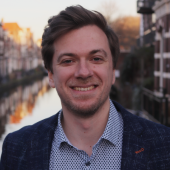
Bart van Lieshout, MSc, Leiden University, Leiden, Netherlands
What does being a 2026 Presidential Trainee Award Recipient mean to you?
Being awarded the 2026 Presidential Trainee Award is an incredible honor and a milestone in my early career. To me, this award represents a validation of the work and passion that I have poured into my research and a sign that I am on the right track. The award is therefore definitely a strong source of motivation for me to commit to my research, and it gives me the confidence to keep pushing. I am truly honored to receive this award.
What was the best thing about attending the ASCPT 2026 Annual Meeting?
The best thing about attending the ASCPT 2026 Annual Meeting was the invaluable opportunity to connect and collaborate on multiple levels. It was fantastic to finally have a face-to-face meeting with my co-authors and collaborators, specifically Dr. Elisa Ignatius from Johns Hopkins University's non-tuberculous mycobacteria group.
The scientific sessions and discussions were incredibly high-level and inspiring. They were on a whole different level than previous meetings I have attended. There were eye-opening presentations that brought together diverse perspectives from across the field of clinical pharmacology. For instance, the session on indigenous health provided an insightful look into rural, hard-to-reach communities, broadening my understanding of how we can make our research more inclusive and impactful.
Why did you submit your abstract for presentation at the ASCPT 2026 Annual Meeting?
We submitted the abstract to ASCPT 2026 because the meeting's focus on Pharmacoequity aligned with our research. The project applies clinical pharmacometrics to evaluate azithromycin for Mycobacterium avium complex infections, an understudied disease that affects vulnerable populations. The ASCPT Annual Meeting was the ideal platform to showcase this work. Ultimately, we wanted to share these findings because they form a crucial starting point for optimizing treatments for similar infections, allowing us to translate our work into a greater clinical impact for underserved patients.
What professional accomplishment are you most proud of?
I am really proud of the time I gave a presentation at the Population Approach Group Europe (PAGE) meeting. I was still a master's student, but I had made some great progress on my project under the guidance of Dr. Imke Bartelink. Our research focused on a population pharmacokinetic analysis for children with Vanishing White Matter, a severe inherited rare disease with no current effective treatment. This project ultimately won the national Dr. Saal van Zwanenberg Thesis Award, further validating my pride in this work. But most of all, it was an incredible experience to work on something with such direct clinical relevance. Presenting these findings was the first time I truly felt I was doing societally significant work, and sharing it with a wider audience ignited a lasting passion to dedicate my absolute best efforts to research.
Who has inspired you in your career?
My mentor, Dr. Rob van Wijk. It is admirable how he combines his scientific expertise with a deep understanding of social issues, and he creates a work environment that is inclusive and collaborative. I have found him to be very patient and trusting of my abilities, while pushing me to develop myself into a better researcher. The amount I have learned from him, especially on how to conduct rigorous science and to use it to answer the relevant questions, has been invaluable to my growth as a researcher.
When you are not working, how do you spend your free time?
I love staying active and spending time outdoors, which is linked to my involvement with the Sea Scouts in the Netherlands, where I have been a member and now a volunteer as a scout leader for over ten years already. It is rewarding to teach the youth members how to sail, set up camp, and cook for themselves, ultimately helping them build self-reliance while having a great time. Of course, I also have a passion for hiking. I recently completed the West Highland Way in Scotland, and my absolute dream is to travel for an extended period to the United States to hike in one of the major National Parks. On a more day-to-day basis, I like to start my mornings at the gym. While it can sometimes be a challenge to balance fitness with a heavy academic workload, I am currently back on track, and I find that a morning workout really sets a positive, focused tone for the rest of my day.
What was your childhood dream job?
As a child, I wanted to become a pilot, which I genuinely considered pursuing for a while. Ultimately, I pivoted to a STEM education because I love learning and doing science. From there, I almost became an engineer but instead narrowed my focus to healthcare. Fortunately, I ended up doing a pharmacometrics research internship, and I have never looked back since! I have always wanted to use my analytical skills to make a tangible impact on society, and this field perfectly merges my tech-savvy abilities with my passion for helping patients in need.
What is one thing people would be surprised to know about you?
People are often surprised to know that I have a twin brother, Erik, who started his PhD in medical physics on the same day I did! People sometimes find out by running into him, thinking he is me or vice versa, which can be quite a confusing conversation. He works on adaptive radiation therapy for personalized and in-treatment dose adaptation to reduce the number of treatment sessions for oncology patients. As an engineer, he is in a completely different field than me, but it is funny that we both ended up using computational research to advance healthcare. Luckily, we work at different locations; otherwise, there would be a few more awkward run-ins with people insisting they know us.
Bart has been a member of ASCPT since 2025.
