Author: on November 05, 2026 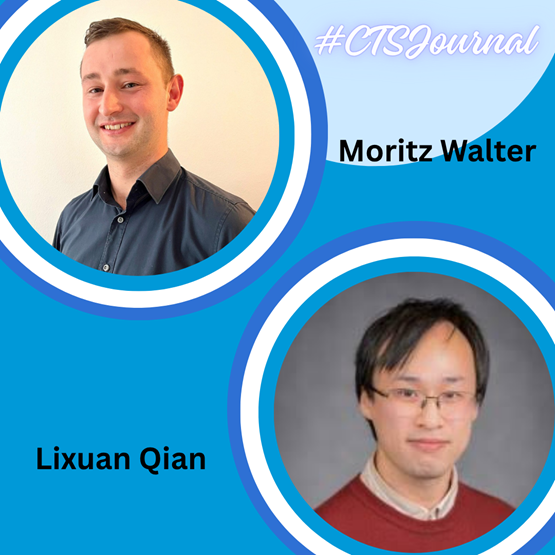
As the Fall semester settles in at schools, colleges, and universities, we look back on the 2026 Clinical and Translational Science (CTS) journal award. Each year, the CTS Editorial Team has the privilege of presenting a CTS award, typically at the annual meeting of the American Society for Clinical Pharmacology & Therapeutics (ASCPT), our sponsoring Society.
Continuing last year's focus, the 2026 award once again recognized outstanding CTS papers written by students and trainees.
This year, the field of candidates was so strong that the Editorial Team could not settle on just one. After careful review and discussion, we selected two trainee-authored papers, each of which shows how quantitative modeling can answer practical questions in drug discovery and clinical pharmacology. The awards were presented at the ASCPT 2026 Annual Meeting in Denver, Colorado. On behalf of the entire CTS Editorial Team, it is my honor to congratulate both winners.
Predicting pharmacokinetic profiles before a compound is ever made
Warm congratulations to Moritz Walter, first author of “Predicting Pharmacokinetics in Rats Using Machine Learning: A Comparative Study Between Empirical, Compartmental, and PBPK-Based Approaches.”
Machine learning (ML) models that predict individual ADME parameters from chemical structure are routine in drug discovery, but predicting a full plasma concentration–time profile is newer. Walter et al. asked how ML is best combined with pharmacokinetic (PK) modeling to predict intravenous PK profiles in rats before a compound is synthesized.
Using data on roughly 8,000 compounds, the team compared four strategies: a one-compartment baseline, direct ML prediction of concentrations, and ML-predicted inputs to compartmental or physiologically based PK (PBPK) models. A temporal split, training on older compounds and predicting newer ones, mimicked real project use.
Across 1,217 test compounds, the three newer approaches performed comparably, with median fold errors just under 3-fold, and all clearly beat the baseline (4.39-fold). The authors suggest choosing among them by fit with a team’s workflow. Combined with potency predictions, these profiles can help prioritize promising candidates earlier in discovery.
Modeling cannabinoids across formulations and routes
Warm congratulations also to Lixuan Qian, first author of “Physiologically Based Pharmacokinetic Modeling of Cannabidiol, Delta-9-Tetrahydrocannabinol, and Their Metabolites in Healthy Adults After Administration by Multiple Routes.”
Cannabidiol (CBD) and delta-9-tetrahydrocannabinol (THC) are used for many conditions, and higher-bioavailability formulations now include an oral CBD solution, inhaled THC, and an oromucosal spray containing both. Their metabolism is complex, and earlier physiologically based pharmacokinetic (PBPK) models left gaps in routes of administration and metabolites covered.
Qian et al. built base models from intravenous data, added oral, inhalation, and oromucosal absorption, and linked models for 7-OH-CBD, 11-OH-THC, and 11-COOH-THC to their parent compounds.
The result is what the authors describe as the most comprehensive PBPK models to date for CBD, THC, and their key metabolites, and it fully integrates 11-COOH-THC into a complete THC model. These verified models provide a foundation for predicting drug–drug interactions and exposure in special populations as cannabinoid use expands.
Championing the next generation
Taken together, this year's winners capture the spirit of translational science: rigorous quantitative methods, applied carefully, to questions that matter for patients and for drug development. One paper brings model-informed thinking to the earliest stage of discovery; the other strengthens the evidence base for widely used but incompletely characterized medicines. Both were led by trainees, and both set a high bar. ASCPT has a long tradition of supporting and celebrating students, trainees, and early career members, including the Presidential Trainee Award, the Leon I. Goldberg Early Investigator Award, and the Darrell Abernethy Early Stage Investigator Award, as well as the Student & Trainee Community and the Early Career Community. CTS shares that commitment and actively encourages the publication of student and trainee papers. Please consider CTS for your next submission, whether you are a student, trainee, early career, or established ASCPT member.

The comment feature is locked by administrator.